Can Highland Cow Milk
Brief History of Highland Cows
The Scottish Highland cattle, also known as Highlanders, are a unique cattle breed with a rich and fascinating history that stretches back centuries. They originate from the rugged and harsh landscapes of the Scottish Highlands, where they have roamed for over a thousand years.
The origins of Highland cattle can be traced back to the ancient Celtic peoples who inhabited the Scottish Highlands in 6th century. These hardy people relied on the land for survival, and they needed a resilient breed of cattle that could thrive in the harsh conditions of the region. Thus, the Highland cattle were selectively bred for their ability to withstand extreme weather, scarce grazing, and rough terrain. They are one of the oldest registered cattle breeds.
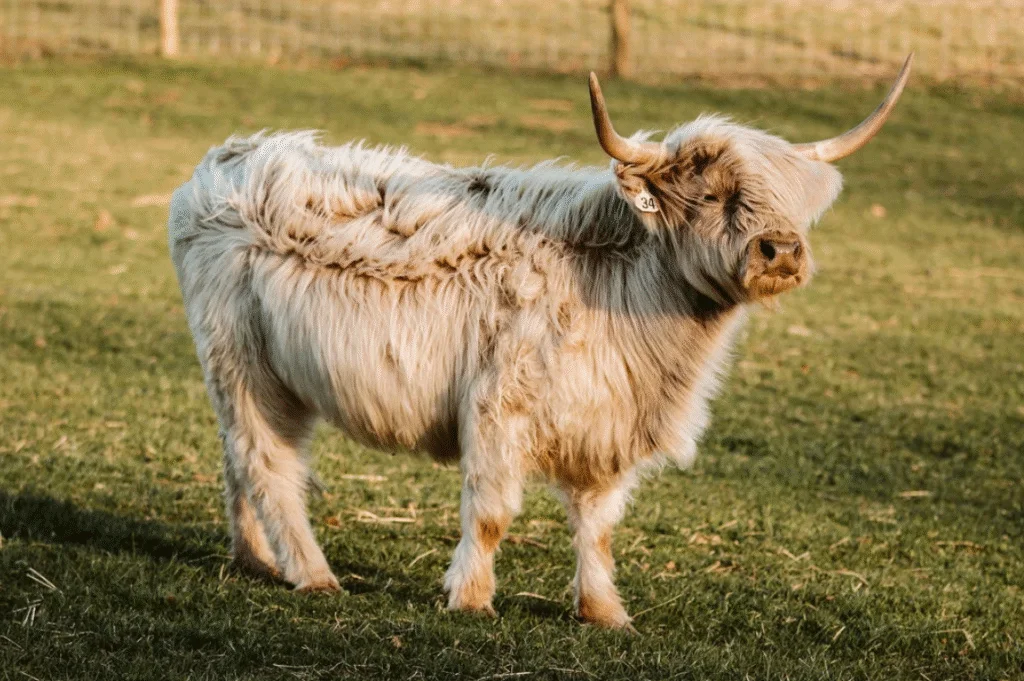
Over time, the Highlanders developed a unique breed that set them apart from other breeds. They have a double coat of hair: a downy undercoat on the inside and long “guard hair” on the outside. This helps them retain body heat against the cold and wet weather, allowing them to survive in the harsh Scottish winters. Their impressive horns, which can grow to be several feet long, are another distinctive feature of the breed along with their long fringe.
Highland cattle played a vital role in the lives of the Scottish Highlanders in the olden days. They were primarily kept as beef cows, but also for their meat, milk, and hides, providing sustenance and resources for the local communities. Their strength and agility also made them valuable working animals, used for hauling timber and plowing fields.
Throughout history, the Highland cattle faced various challenges, including changes in land use and agricultural practices. At times, they were even threatened with extinction. However, their unique qualities and cultural significance led to dedicated efforts to preserve the breed.
Highland cows today can be found not only in Scotland but also in many other parts of the world, where they are appreciated for their hardiness, adaptability, and distinctive appearance.
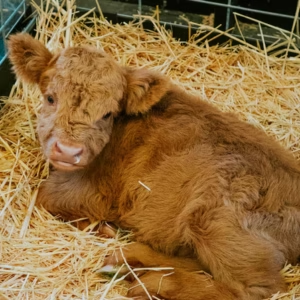
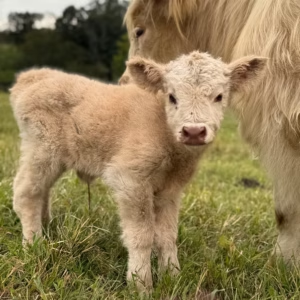
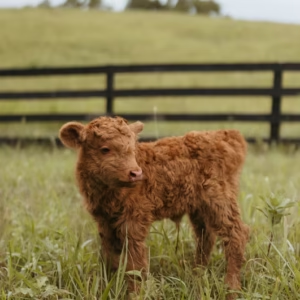
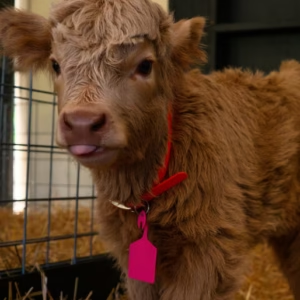
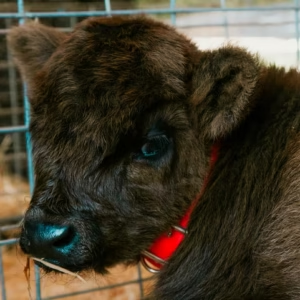
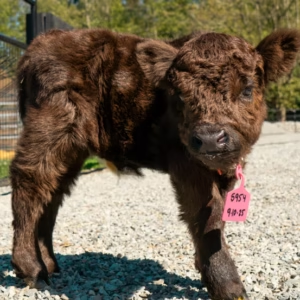
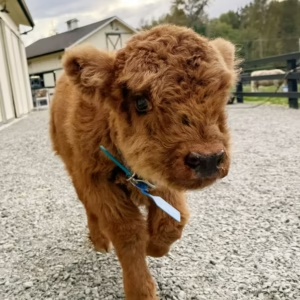
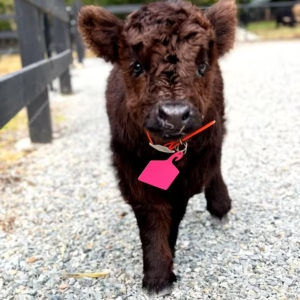
Equipment needed to milk a highland cow
Once you and your cow get used to the process, to milk a highland cow is a pretty straightforward process. There are however a few things you will need that will make it significantly easier.
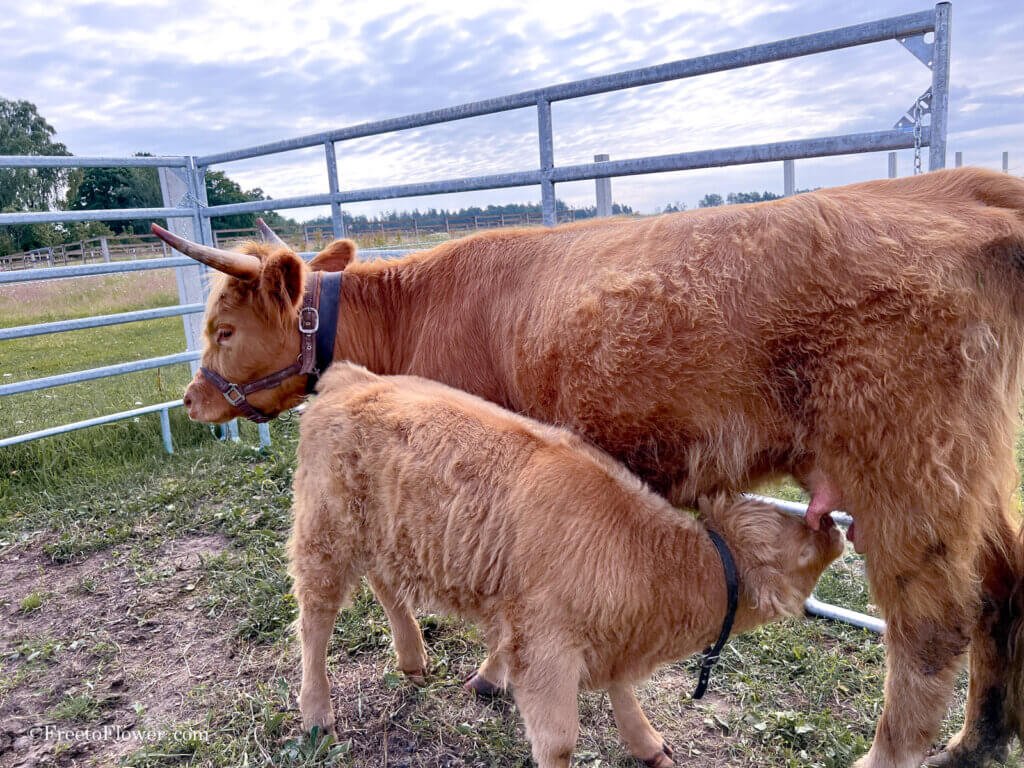
- Halter – you will need something to lead your cow from pasture to the milking area and secure her there
- Leather neck strap – This is optional, but we use this in addition to a halter, as those can snap easily. I think of it as a safety.
- Feed Pail – this will hold the feed you’re offering your cow while you milk her. Especially useful for young cows that are just getting used to the process.
- Milking bucket – this can be a smaller, clean bucket, or a milking can.
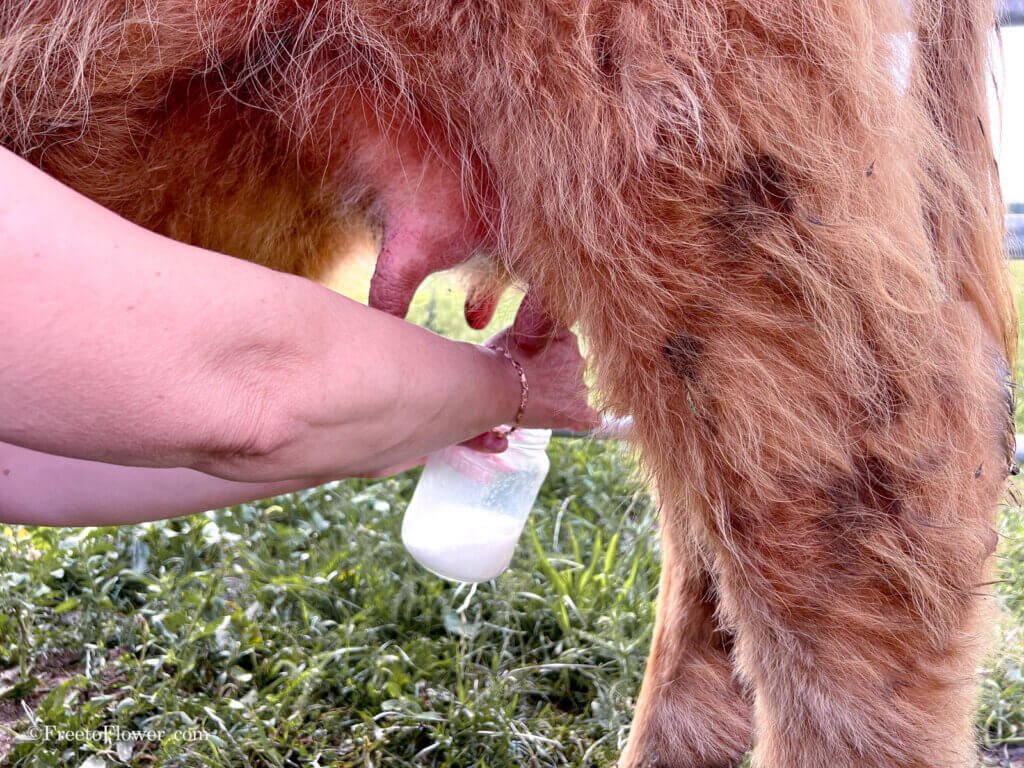
- Small jar – when you first begin learning how to milk & teaching your cow how to do the same, it’s useful t have a smaller jar for milking that you will then dump into a larger milk container at regular intervals. Should there be a mishap of any sort, you won’t be left crying over (much) spoilt milk.
- Few rags/cloths – one dry and one soaked with warm water. You will use those to clean off your cow’s teats before milking.
- Pen for calf – you will only need this if you’re calf sharing like we are.
How to Milk a highland cow
- Bring your cow to your designated milking area. The best place for milking will depend on your setup. It can be a corner of your field, a small paddock, or a designated milking box. We are currently working on building a simple milking box to make the process easy & smooth for everyone.
- Secure your cow. Tie her to the fence post or close her off in the milking box. Offer feed.
- Clean off her teats. Use the warm water rag first, followed by the clean dry one. Make sure her udder and teats and nice and clean. Make sure your milking area is clean too.
- Milk a little bit of milk onto the ground. This will help clean out the milk duct and make sure there are no bacteria present in the milk you keep.
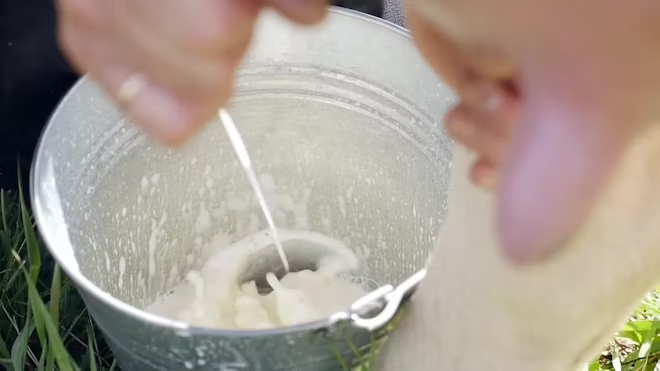
- Pick a teat and milk your highland cow! The ease & speed of the process will depend on your & your cow’s experience level. Our cow is still learning how to stand still in one spot, and we don’t yet have a milking box for her. It can sometimes take us a while to help her stand calmly. Once she does, the milking process is very fast.
- Milk into the small jar, and periodically dump into the larger container. Make sure the milk is as clean as possible, without much debris.
- Make sure to empty all 4 quadrants. If you’re calf sharing, this is not as imperative as if you’re not. The calf will finish off any milk you leave. However, in the absence of a calf, emptying out the udder is very important to prevent infection.
- Praise your cow and release her back into the field.
- Repeat every 12 hours, or every 24 hours if you’re on a calf-sharing schedule
how to Milk a highland cow FAQ
1. How do you calf share?
This is pretty easy & very convenient. All you need is a sturdy pen that the calf won’t be able to escape from. We separate out cow & calf overnight for a period of 12 hours. The cow is free to graze, while the calf is in her pen. We milk the cow in the morning and then reunite her with her calf for the rest of the day. The calf is free to drink as much as she desires all day long, until the evening when they’re separated again.
Our calf is currently about 3 months old. We will probably continue calf sharing for another couple of months before weaning her completely. The big advantage of calf sharing is that you don’t have to milk if/when you don’t want to. The calf will drink whatever milk you don’t collect. Another good reason for calf sharing is that it allows to he calf to continue drinking milk for a much longer period of time, while also supplying milk for the house.
2. Do you milk your highland cow by hand or use a milking machine?
We milk by hand. I don’t have any experience with using a milking machine. Highland cows have smaller teats, so keep that in mind if you do end up going down the milking machine route.
3. How much milk do you get?
We currently get between 2-3 liters per day. This amount will go up when we wean the calf to around 7 liters per day. With subsequent calves, we expect her milk yields to go up. However, this amount has been perfect so far for our personal use. I much prefer having slightly less milk than having so much on my hands that I end up wasting some.
4. What if she doesn’t want to stand still?
This is something we’re currently working on with our cow. She gets better and better with every milking, however, it’s still a process. Keeping her calf very close by has been beneficial. Choosing a spot in the corner of a sturdy fence has been good too, as she doesn’t have that much space to wiggle around. A simple milking box will take care of this issue, allowing us to milk at a much faster speed.