What to Expect When Raising a Newborn Mini Baby Donkey
Imagine coming face-to-face with a pint-sized bundle of joy that’s about as tall as your kitchen counter. That’s exactly what you’ll get with a mini baby donkey – nature’s adorable answer to the question “What if we made donkeys pocket-sized?” These charming little companions have been stealing hearts and bringing smiles to farms across the country.
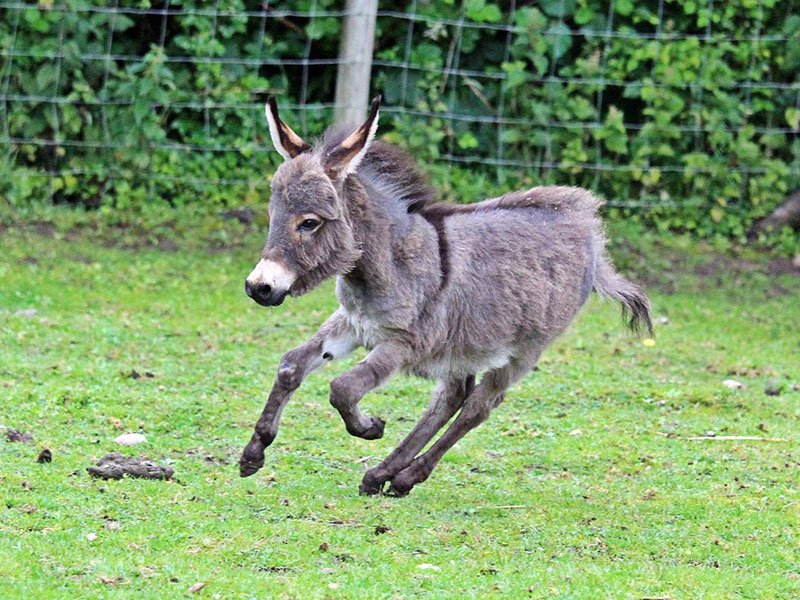
You might think you’ve seen cute before, but wait until you meet a miniature donkey foal. Standing just 26-34 inches tall at maturity, these tiny tots pack more personality per square inch than their full-sized cousins. And while they’re small enough to fit in your backyard, they’re big enough to make unforgettable family companions with their gentle nature and playful spirits.
Understanding the Mini Baby Donkey Breed
These adorable miniatures come from the Mediterranean islands of Sicily and Sardinia, where they developed their distinctive small size and friendly personality. They’re officially known as Mediterranean Miniature Donkeys, but most folks just call them mini donkeys.
Physical Characteristics
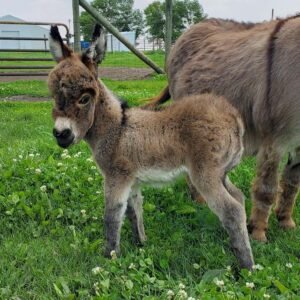
Mini donkeys are walking bundles of charm. Their soft, fuzzy coats come in various colors – from gray-dun and brown to black or spotted patterns. What makes them truly special are their standout features:
- Those big, expressive eyes with movie-star lashes
- A distinctive cross-shaped marking on their back
- Compact, muscular bodies with straight legs
- Perky ears that stand 6-8 inches tall
- The most adorable fluffy mane that stands upright
- A short tail with a lovely long-haired tip
Size and Weight Details
Mini donkeys are perfectly pocket-sized! Here’s what you can expect:
When fully grown, they stand 26-34 inches tall – about the height of your kitchen counter. Newborn foals tip the scales at just 15-25 pounds, while adults weigh in at a manageable 200-350 pounds. For official registration, they need to measure between 30-36 inches tall.
A few fun facts about their growth:
- By 2 months old, they’re already half their adult height
- They finish growing around age 3
- Boys tend to be slightly taller than girls by 1-2 inches
- Their chest measures about 36-46 inches around
- Their neck typically spans 12-16 inches
mini donkeys for sale

Barry – miniature male Donkey
$1,200.00Calvin – miniature male “Jack” Donkey
$1,000.00
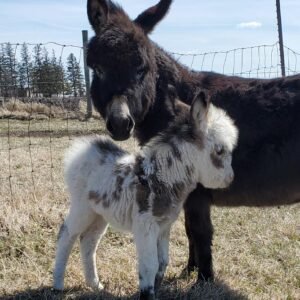
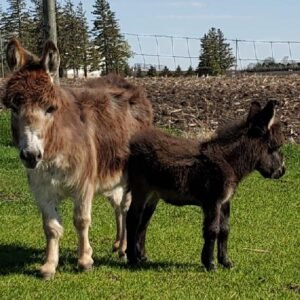
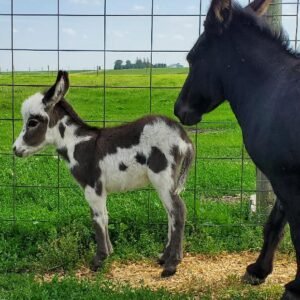
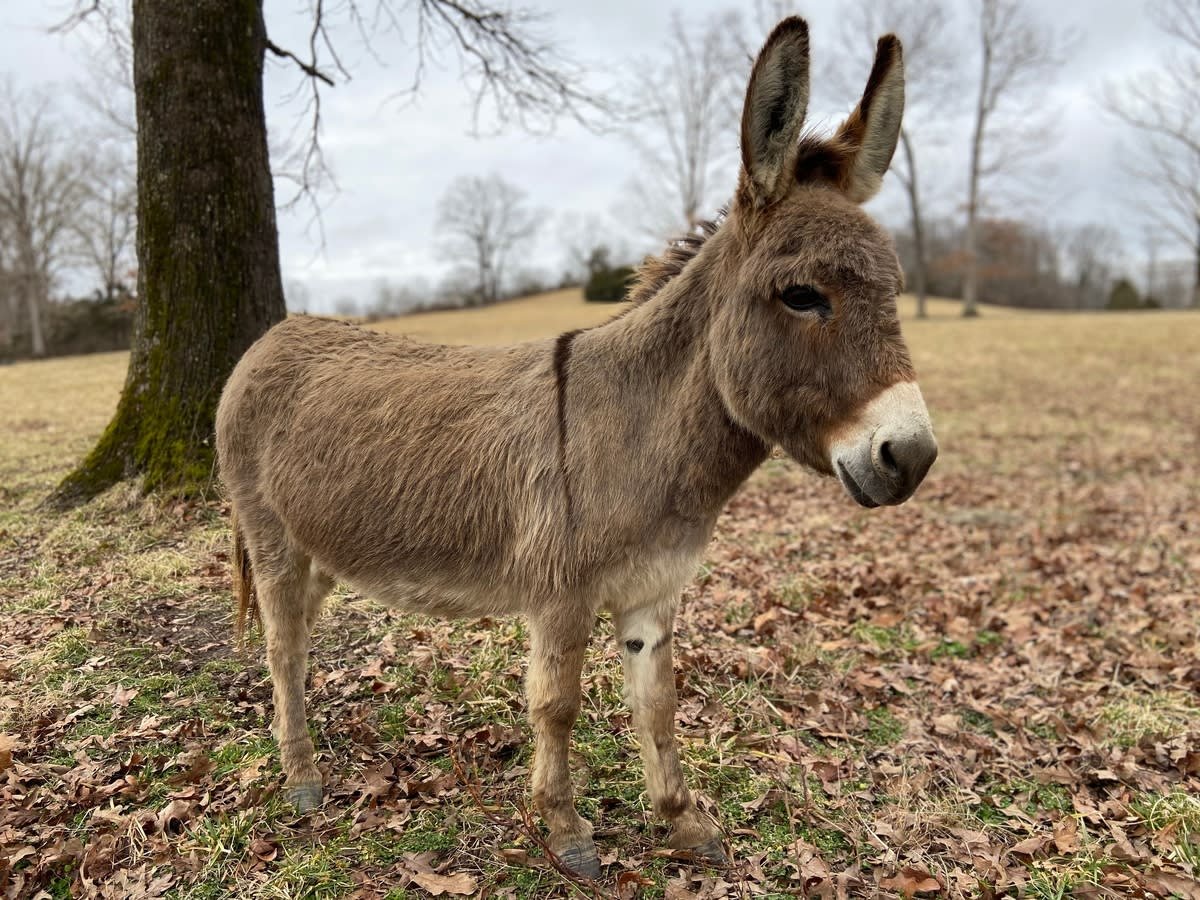
Caring for Your Mini Baby Donkey
Taking care of these little ones isn’t complicated, but it does require attention to detail. Here’s your guide to keeping your mini companion happy and healthy.
Feeding and Nutrition
Mini donkeys thrive on a simple, fiber-rich diet. Here’s what they need:
The daily menu is pretty straightforward – they need hay equal to about 1.5% of their body weight, split between morning and evening meals. Orchard grass hay works best as their main course. You can add some barley straw for extra fiber, but skip the alfalfa hay – it’s too rich for these little ones. If your donkey needs to gain weight, you can add some fiber pellets to their diet.
You can read our ful article about what do mini donkeys eat?
Housing Requirements
Your mini donkey needs a cozy place to call home. Here’s how to set it up:
Start with a simple 8×8 foot run-in shelter with three sides. Make sure it has:
- A weather-tight roof and walls
- Good drainage with raised flooring
- Fresh, clean bedding
- Protection from wind and rain
For their outdoor space, provide:
- Secure fencing at least 4.5 feet high
- A minimum of half an acre for grazing
- Easy access to clean water
- Safe, non-slip ground surfaces
- Protected spots for feeding
- Comfortable areas for rest
- Plenty of shade for hot days
- Only safe, non-toxic plants in their space
Keep their living area clean and well-maintained, and they’ll be happy as can be!
Training and Socialization Tips
Mini donkeys are smart, social animals who love to learn. With consistent, gentle training from an early age, they’ll develop into well-mannered companions who are a joy to be around.
Early Handling Techniques
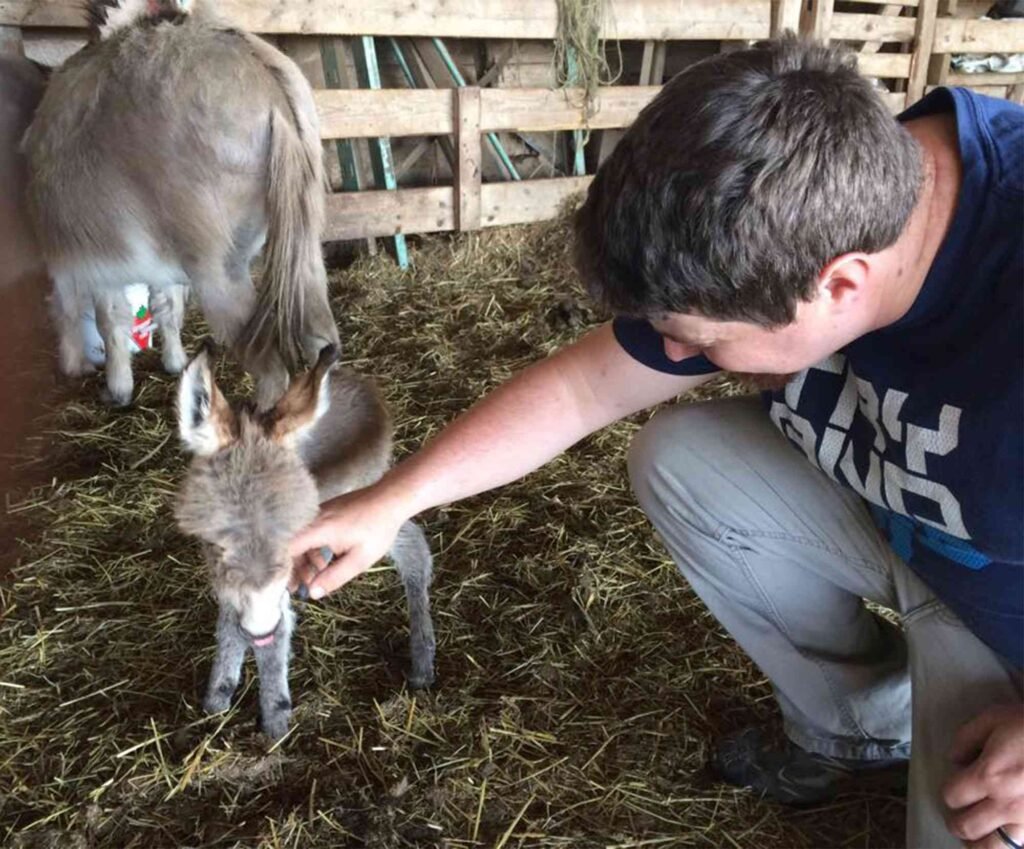
Start working with your mini donkey when they’re about 2-3 months old. Here’s how to begin:
- Get them used to your touch – gently handle their legs, ears, and face
- Practice short 5-10 minute halter sessions
- Keep some healthy treats handy (carrots and apple pieces work great)
- Try clicker training for basic commands
- Set up a regular daily schedule for training
Building Trust and Bonds
Building a strong relationship with your mini donkey takes time and patience:
- Spend quiet time with them daily (15-20 minutes works well)
- Make eye contact during your interactions
- Let them take treats from your open palm
- Use a gentle, consistent voice for commands
- Move at their pace – never rush training
- Practice leading them with light halter pressure
- Start handling their hooves briefly, just 2-3 seconds per foot
Training Timeline:
- First touching and handling: 2-3 months old (5-10 minute sessions)
- Halter training: 3-4 months old (10-15 minute sessions)
- Lead training: 4-5 months old (15-20 minute sessions)
- Foot handling: 5-6 months old (5-10 minute sessions)
Health and Wellness Essentials
Keeping your mini donkey healthy isn’t complicated, but it does require attention to detail. Here’s what you need to know about their health care needs.
Common Health Issues
Keep an eye out for these common concerns:
Parasites are a big one – strongyles, roundworms, pinworms, and tapeworms can all affect mini donkeys. Regular fecal tests are your best defense.
Watch for digestive issues too. If you notice:
- Less interest in food
- Different-looking manure
- Low energy or depression
- Signs of colic …it’s time to call the vet.
Preventive Care Measures
Stay on top of these basics:
Diet Management:
- Stick to timothy or orchard grass hay
- Skip the alfalfa
- Use high-fiber pellets as supplements when needed
- Always provide fresh, clean water
Parasite Control:
- Schedule regular fecal checks
- Follow a deworming program
- Keep their pasture clean
Regular Health Checks:
- Check body condition weekly
- Look at hooves daily
- Monitor dental health monthly
- Take temperature when needed
Daily Nutrition Guide:
- Hay: 1-2% of body weight
- Fiber pellets: 0.25-0.5% of body weight (if needed)
- Fresh water: 3-5 gallons
- Beet pulp: 0.1-0.2% of body weight (only if recommended)
Mini Baby Donkeys as Pets
A mini donkey brings something special to your family they’re like having a smart, gentle pony with the personality of a loving dog. Their small size makes them perfect for modest properties, and their friendly nature fits well in many home situations.
Benefits of Ownership
Here’s why mini donkeys make amazing pets:
They’re in it for the long haul – expect 25-30 years of friendship with these little ones. They’re smart too, quickly picking up:
- Fun obstacle courses
- Therapy work skills
- Basic commands
Like dogs, they form strong bonds and love being around their people. You’ll notice:
- They seek out interaction
- Stay calm and steady
- Pay attention to their humans
Cost Considerations
Let’s talk about what you need to invest for a mini donkey:
Initial Costs:
- Purchase price: $500-3,000
- Basic shelter: $1,000-2,500
- Fencing: $1,500-3,000
Ongoing Expenses:
- Annual feed: $300-500
- Vet care: $200-400 yearly
- Regular hoof trimming
- Dental check-ups
- Basic supplies (halters, grooming tools)
- Emergency fund
- Property upkeep