Bottle Feeding Nigerian Dwarf Goats
When we first got our Nigerian Dwarf kids we had people we love oppose of the idea of us taking bottle fed kids. They told us that there was a possibility our kids wouldn’t take the bottle so we had a lot of pressure coming from them. You see, we were totally new to the goat world and we picked up three bottle feeding nigerian dwarf goats babies at once. We were scared. We were scared that our kids wouldn’t take the bottle. We were scared that they would die. We were scared that we had made a big mistake. So in this post we want to share our experience. We want to share what we learned from bottle feeding our kids. Three of our kids were bottle fed and one wasn’t. Bottle fed babies are crazy about us. They cry when we walk by. They run up to us and jump on our backs if we squat. Our kid that wasn’t bottle fed is still not sure about us. He never comes up to us but he is getting used to us.
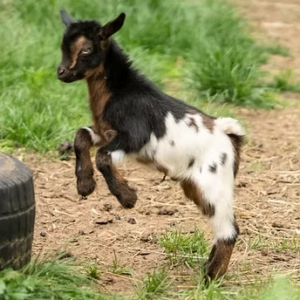
When we picked up our bottle fed kids they cried the whole time in the car. They cried a good two/three days. They were not interested in the milk. They weren’t interested in us. For the first two weeks we kept them in the house during the night just because it was still cold. We put diapers on them so that we wouldn’t have a big mess everywhere. Diapers kept on falling off so we put clothes on top and that helped. The kids didn’t cry at night. Praise God so we were able to get a good night rest. When we got our kids the girls were sisters and were two weeks old. The boy was not related to the sisters and was four weeks old. The girls did really well. During the day we let them run around outside and they would go crazy jumping all over the place. The girls had their tails up the entire time. Our boy was a different story. His tail was down. He wasn’t as active. I really worried about him. His droppings looked healthy and he was eating well so we just kept an eye on him. I think the move was difficult for him. The girls had each other and were younger so they had an easier time adjusting.
nigerian dwarf goats for sale in east texas
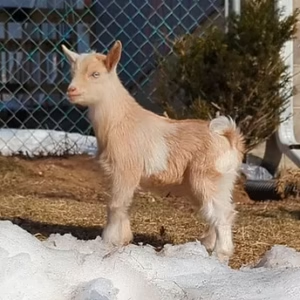
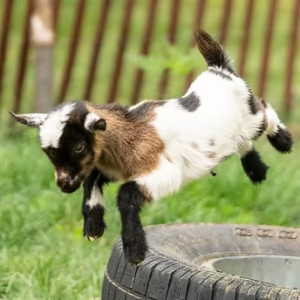
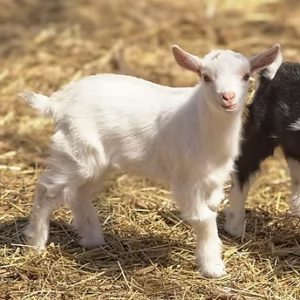
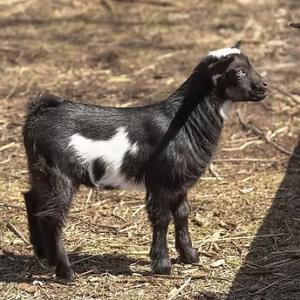
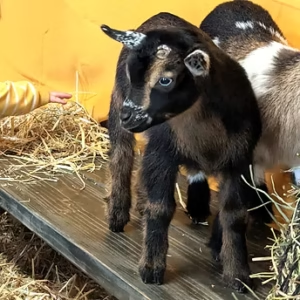
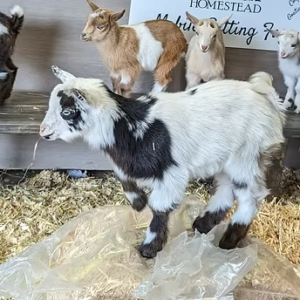
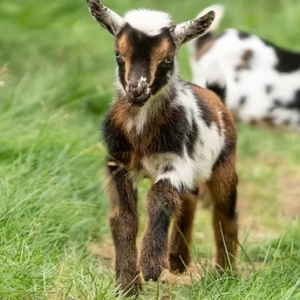
How to Start Bottle Feeding Baby Goats
For the first two days it was hard. They would take about one ounce at a time. They weren’t too interested in the bottle and they were forced fed, meaning that we had to open their mouth and put the bottle inside their mouths. After three days it became easier. The kids came to us and felt comfortable with us. The first week was hard though. I had a timer on my phone so I would not forget to feed them. It was a lot of work. I cried a lot. They cried a lot. Be gracious on yourself. Remember change is hard. Have a routine and stick to it. Every morning we would take them outside and let them run around in the grass. We did this twice a day in the morning and in the evening before we brought them outside. We then put them in their temporary enclosure for the rest of the day.
I highly recommend you speak to the breeder and ask her or him to put the kid on the bottle before she gives him or her to you. Responsible breeders usually do this. Ours sadly didn’t do this. We thought it was how it was supposed to be done but after connecting with others we learned that it is frowned upon to sell a kid who will be bottle fed without making sure the kid will take the bottle before the kid goes home with you.
We first bought goat formula but it was such a hassle and too much work. Plus the kids weren’t big fans of it. We found a goat Facebook group and learned that kids do very well with whole red cap store bought milk. That is what we quickly switched to. We bought bottles at tractor supply. The bottles with the red nipple. The red nipple doesn’t have a hole so make sure you cut a small hole. We warmed up our kids milk before we fed them. We simply put a pot of water on the stove. Warmed it up and placed the bottles inside. Make sure the water isn’t too warm by testing it on your wrist. Milk temp should be 102-103. Shake the bottle before giving to your kid.
Our girls loved the bottle and finished their bottles within a few minutes. Fredrick took so long to finish his bottle and always ate less. It could be due to the fact that he was four weeks old when he started taking the bottle. The older the kid is the harder it is for the kid to take the bottle. We fed the kids for ten weeks. Most say eight weeks is enough. Fredrick weaned himself.
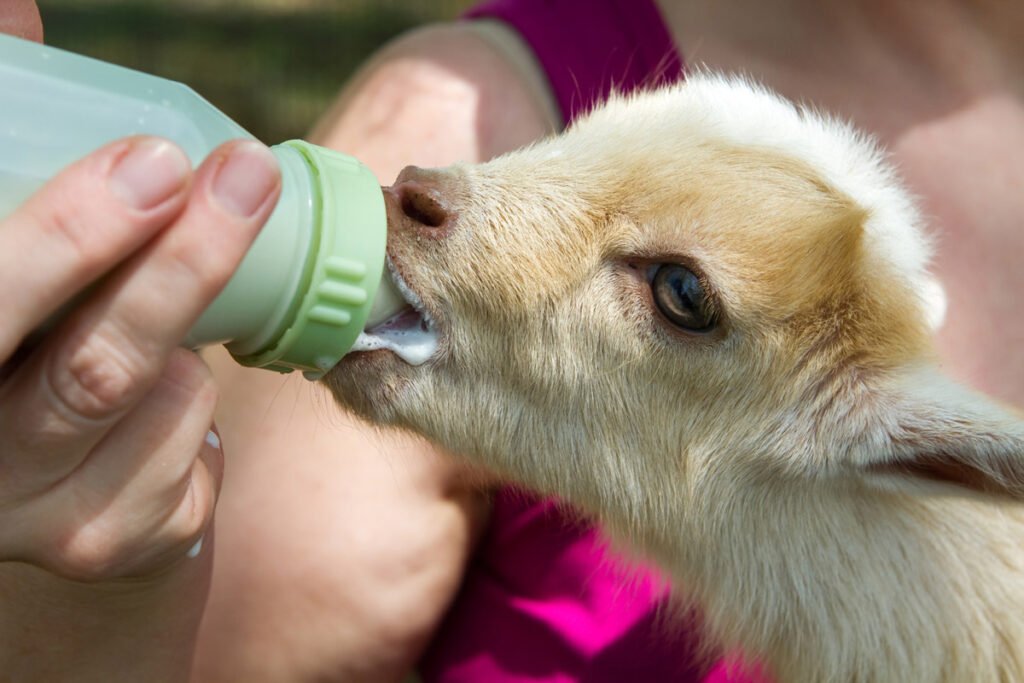
When our girls were just two weeks old and Fredrick was four weeks, we started our bottle-feeding journey, and it quickly became one of the sweetest parts of raising goats. Here’s everything we’ve learned about feeding, care, and keeping them happy and healthy.
Keeping Water, Hay & Minerals Available
Since day one, we’ve always kept fresh water and an alfalfa/grass hay mix available for our baby goats. We also keep a small bowl of baking soda and another of free-choice minerals out at all times.
Don’t be alarmed if your young kids barely drink any water in the beginning that’s completely normal. Just make sure it’s always there for them. As they grow and especially after weaning, they’ll start drinking more regularly.
And this part is important: never give baby goats water through a bottle. Doing so can cause serious health problems, including blood in their urine. Always let them drink water naturally from a dish or bucket.
When you first start bottle feeding, it takes a little patience. Gently open the kid’s mouth with one hand while holding the bottle with the other. Make sure their tongue stays down and that the bottle nipple sits above it. It usually takes a day or two for them to figure it out then they’ll come running every time they see the bottle.
Before long, they’ll open their mouths on their own and make feeding time one of the best parts of your day. It’s hard not to fall in love with bottle-fed goat kids they’re affectionate, playful, and incredibly trusting.
Why Goats Need a Friend
If you’re planning to raise goats, I can’t stress this enough get more than one. Goats are herd animals; they’re happiest and healthiest when they have a companion.
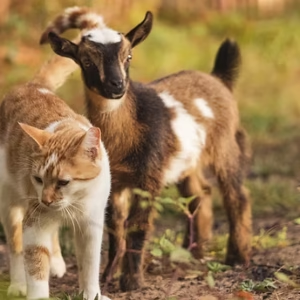
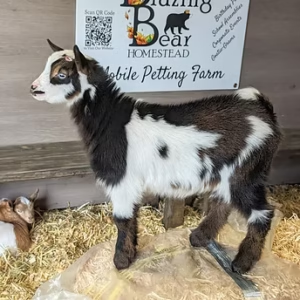
When we picked up Butterscotch (our non-bottle-fed kid), he was shy, nervous, and barely touched his hay. But the moment he met Fredrick, everything changed. He started eating, playing, and even warming up to us because he saw how much Fredrick loved people.
Goats are social, smart, and full of personality. Once you see them play or nap together, you’ll understand why raising more than one is always the right call.
Our Bottle Feeding Schedule for Baby Goats
Here’s the exact bottle feeding schedule we used for our baby goats from birth to weaning. Every goat grows at its own pace, but this outline works well for most kids:
Day 1:
Feed colostrum every 2–4 hours if possible.
Week 1–2:
8 AM – 4–6 oz
12 PM – 4–6 oz
4 PM – 4–6 oz
8 PM – 4–6 oz
Week 2–4:
8 AM – 6–12 oz
12 PM – 6–12 oz
4 PM – 6–12 oz
8 PM – 6–12 oz
Week 4–6:
8 AM – 6–12 oz
2 PM – 6–12 oz
8 PM – 6–12 oz
Week 6–7:
8 AM – 6–12 oz
8 PM – 6–12 oz
7 Weeks to Weaning:
8 AM – 6–12 oz
As they approach weaning, you’ll notice they naturally drink less milk and start eating more hay and pellets. Don’t rush it gradual weaning keeps their digestion stable and prevents stress.