What Do Pygmy Goats Eat? A Complete Beginner’s Feeding Guide
What do pygmy goats eat? The main food of goats is browse, which is bushes and trees, but that’s just the beginning.
Many new or aspiring goat owners ask what goats eat and expect a short, simple answer. Some expect you to say, “Everything!” because they even eat tin cans, right? Um, no, they don’t eat tin cans. And they don’t eat everything. Compared to cows, goats actually have a rather sensitive digestive system, so it’s fairly easy to create a problem.
The long answer to the question depends on gender, age, stress, health, breeding, pregnancy, and milking status. In general, goats are browsers, which means they prefer to eat leaves, twigs, buds, and bark from trees and bushes. They are not naturally grazers, but they will eat grass if there isn’t anything else growing in their pasture, and they prefer most weeds to grass.
Goats never lived in the wild in North America, and we don’t have what they need to thrive in most areas. (So-called mountain goats are actually members of the antelope family.) Goats originally came from deserts in Africa and Asia.
That means we must pay special attention to their diet. It’s not as simple as sheep and cows, which are grazers. Goats have done well in Europe because mountains tend to have browse available 12 months a year like deserts. People who keep goats in the mountains and deserts of North America tend to have fewer parasite problems and healthier goats than those of us who live on the prairies and plains where browse is either non-existent or only available during the growing season.
In addition to everything listed below, all goats need 24/7 access to a high-quality loose goat mineral. I’ve also raised sheep and cattle, and they are not nearly as dependent upon minerals as goats are.
baby nigerian dwarf goats for sale
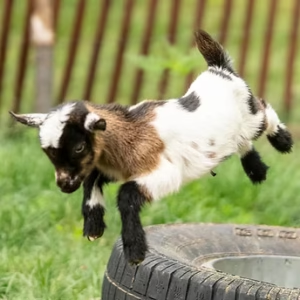
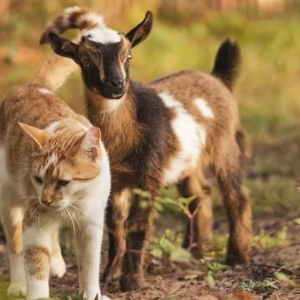
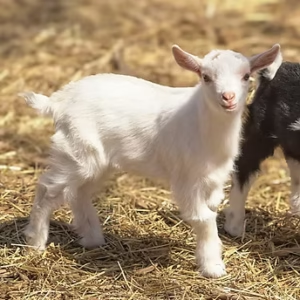
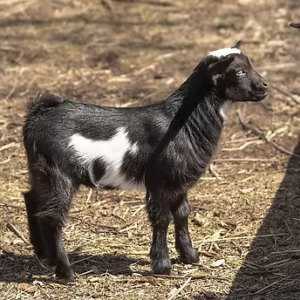
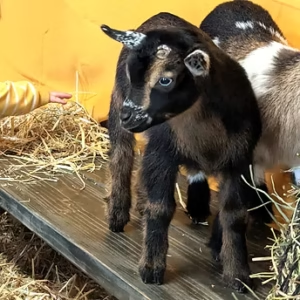
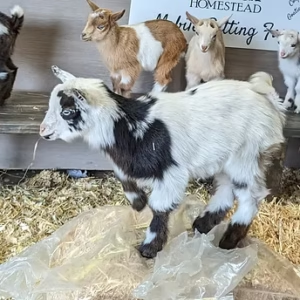
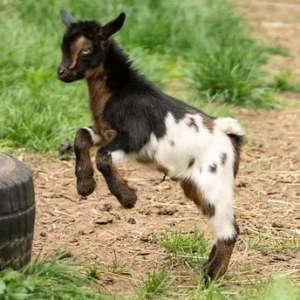
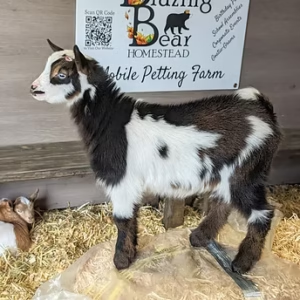
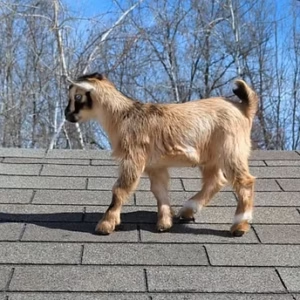
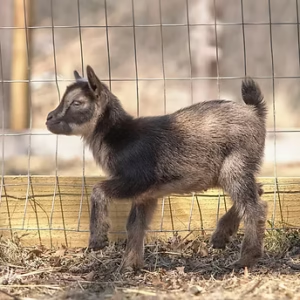
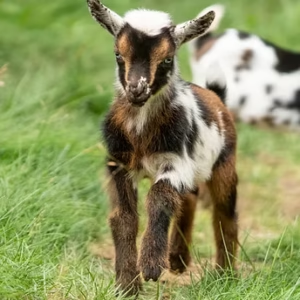
What do male goats eat?
As a rule, bucks and wethers (castrated males) should not have grain because it can cause urinary stones. (Goat “feeds” are made of grain.) During breeding season, however, some bucks may lose quite a bit of weight because they are fighting with each other, chasing does, breeding does, and not taking the time to eat much. If you have a buck that’s losing a lot of weight, you can give him some goat feed for a short time to get him back into condition.
You should not feed individual or mixed grains, such as corn, oats, barley, etc., to bucks. If they are losing body condition, they need protein, and individual grains have about half as much protein as a 16% goat feed.
When you feed any grain (goat feed) to a buck, you need to provide free-choice baking soda so that he can self-medicate if the grain upsets his rumen — especially when you first start feeding him the supplemental grain, which should be introduced gradually.
It’s also a good idea to get goat feed that has ammonium chloride in it to prevent the formation of urinary stones. Bucks and wethers have such a small urethra that even the tiniest stone can cause a blockage and kill them. According to Sheep, Goat, and Cervid Medicine (2021), struvite (magnesium ammonium phosphate) and apatite (calcium phosphate) are commonly seen in goats fed high-grain diets.
Wethers are especially easy keepers, and it’s easy to kill them with kindness. Since they are not growing babies or producing milk or sperm, they have a pretty easy life. They do well on pasture, browse, and good grass hay after they have reached about 50% of their adult weight, which usually happens between 6 and 12 months of age. These ages are just a guideline. Size is the most important factor as some goats can be small for their age if they had a serious parasite challenge as a young kid. On the flip side, they can grow much faster if their mother was a bucket-busting milker.
Can male goats eat alfalfa?
Alfalfa is too rich for male goats after 6 to 12 months when their growth rate slows down, and it can lead to a zinc deficiency because of the high calcium content. Calcium is a zinc antagonist, which means that it can bind with the zinc making it unavailable for the goat to absorb, even if the goat is consuming enough zinc.
Alfalfa can also cause urinary stones. Some people mistakenly believe that only grain can cause stones, but there are several different types of stones, and different types of stones are the result of consuming different types of feedstuff. According to Sheep, Goat, and Cervid Medicine (2021), goats “consuming legumes are predisposed to calcium carbonate uroliths.”
What do female goats eat?
The answer to this depends on whether does are pregnant, milking, or dry, meaning not milking. Dry does are fed very similarly to bucks and wethers after they are about 6 to 12 months old and have done most of their really fast growing. Again, size is more important than age, and that can vary tremendously from goat to goat. They don’t usually need goat feed after they’ve reached about 50% of their adult weight, although if you plan to breed them, you can feed them alfalfa hay rather than grass hay.
When does are in milk, they need grain in the form of a 16% protein commercial goat feed, which will have additional vitamins and minerals added. It is not helpful to feed something like plain corn, which is high in fat and carbohydrates with very low protein.
As with bucks, if female goats are eating grain, they should also have baking soda available in case of an occasional rumen upset. Please do not add baking soda to their grain. (That would be like us eating Tums with every meal.) If they never touch the baking soda, that’s great.
Milkers also need alfalfa hay, which is high in protein and calcium, which they need for making milk.
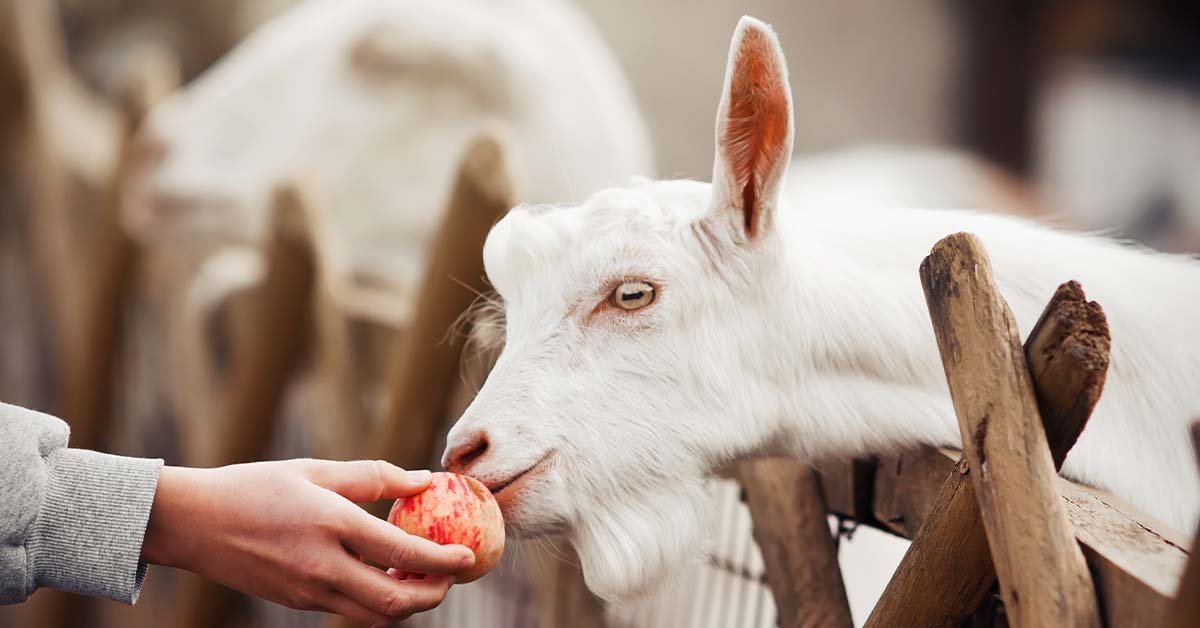
Many does are milking the first three months of pregnancy, which means they are eating grain and alfalfa hay. You should stop milking about two months before the due date so that all of the doe’s energy can go towards growing the babies.
Although you don’t need to continue feeding grain during pregnancy, you should continue feeding alfalfa. At least 50 percent of the pregnant goat’s hay should be alfalfa (or another legume such as peanut hay) because she needs the high calcium for growing babies. If you have access to 100 percent alfalfa, it’s fine to feed that.
The closer you get to the end of pregnancy, the faster the kids are growing, so if you are not feeding 100% alfalfa hay, then you should feed a small amount of grain to boost the protein content of the doe’s diet.
Some people who are familiar with cattle will warn you against feeding 100% alfalfa to your goats because research in cows has linked a diet high in alfalfa to hypocalcemia, but that is not the case in goats. Hypocalcemia happens most often in goats towards the end of pregnancy because they are growing multiple fetuses, whereas it happens in cows after freshening because of their extremely high milk production.
Check out my interview with Dr. Robert VanSaun, a vet professor and ruminant nutritionist at Pennsylvania State University, about hypocalcemia in goats and how it is different from cows.
What do baby goats eat?
When kids are first born, they should get their mother’s colostrum within six hours of birth, or they will probably die. The ruminant placenta is nothing like the human placenta, and maternal transfer of antibodies through the goat placenta is minimal, which is why colostrum is absolutely vital for a baby goat to survive.
The textbooks say that they need at least five percent of their body weight in colostrum within the first six hours and 10 percent of their body weight in the first 24 hours but up to 20% of their body weight is great. If a kid is healthy and nursing vigorously, they will get that without any problem. The numbers are for us humans when we have to bottle feed. Here is a post on the basics of bottle-feeding baby goats.
When baby goats are dam raised, meaning raised by their mother, they will imitate her and start to nibble on grain and hay within a few days of birth. They are not getting a substantial amount of nutrients from the solids though.
The vast majority of their nutrition will come from their mother’s milk for the first two months. In addition to a lot of protein and calcium, which they need for rapid growth, they also get antibodies from the mom that help to keep them healthy as their own immune system matures. I won’t sell my Nigerian dwarf kids until they weigh at least 20 pounds, which is about 1/3 of the adult weight of a doe and 1/4 the adult weight of a buck. I never wean doelings that I am keeping. They typically stop nursing when their mother gets pregnant (if not sooner) because her milk dries up when she is 2-3 months pregnant.
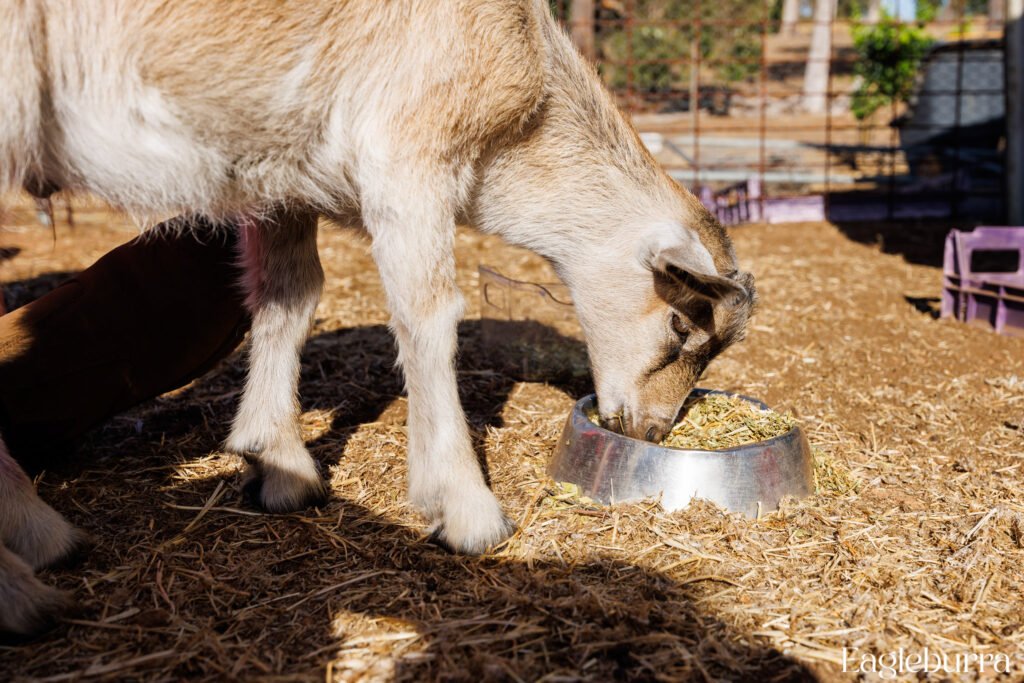
If a baby goat has been nursing on its mother and does not weigh enough to be weaned, it should never be sold to a new goat owner unless it has been completely trained to take a bottle, which will take several days.
I have received a frustrating number of emails from people who’ve been sold kids as young as three weeks old and told that they’re eating now, so don’t need milk any longer, or that they’ll take a bottle if they want it. Neither of those is true and will lead to a kid that will not grow well and will have problems with coccidiosis and worm overloads, which may ultimately lead to death. Some of these kids also get dehydrated and die because they are not drinking enough water.
When do baby goats start eating grain and hay?
If you are bottle feeding and the kids have no adults to imitate, they may not start to eat hay or grain until closer to a month old. This is why I discourage people from raising baby goats in the house. Even if the kids don’t appear to be eating anything, you should have hay available for them 24/7, which is kind of messy in your living room.
Like human kids, goat kids put everything in their mouth, so if the hay is there all the time, they’ll eventually put it in their mouth and figure out that they can chew and taste and swallow and all of that good stuff. If they are in your house, they might try things like paper and electrical cords.
Can goats eat corn, wheat, barley, oats, and other grains?
There is no place for simple grains in a goat’s diet beyond a handful once or twice a week as a treat. Think of individual grains as goat candy. Corn, wheat, barley, and oats are not good for goats. They are high in carbs and low in protein. Milking does need 16% protein in their goat feed, and simple grains have half that or less.
Grain can cause urinary stones in male goats. Some people think that if they feed alfalfa at the same time, it will keep the calcium and phosphorus balanced, which is true, but you wind up throwing the zinc off balance with the high calcium of the alfalfa. Because grain offers no benefits to male goats, it doesn’t make sense to risk a mineral imbalance by feeding it.
If you have a male goat that has lost a lot of weight due to parasites or a similar stressor, you can temporarily feed him the 16% goat feed because he needs protein to rebuild lost muscle mass, but you also have to treat the parasites. Simply feeding grain won’t kill the worms.
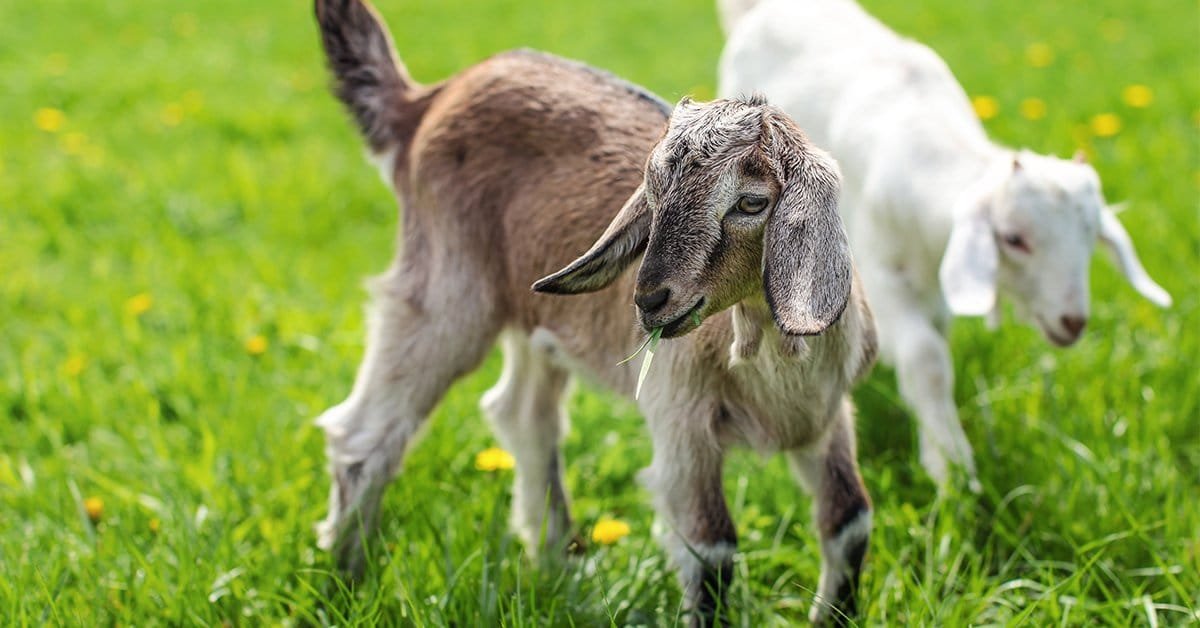
What is in goat feed?
A good goat feed is 16% protein and is made from a blend of grains, including one that is high in protein. That usually means soy, but you can also find feeds that use field peas instead.
Good goat feeds also have added minerals. I look for about 35-40 ppm copper and 0.5 ppm selenium. Those are two of the most common mineral deficiencies in goats, which is why it’s important to provide goat feed (and a loose mineral) that has a good amount of these minerals.
You may see goat feeds that have added vitamins A, D, and E in them, but that’s not needed because green plants provide plenty of vitamins A and E, and goats make their own vitamin D from the sun like humans.
Can goats eat hay pellets?
Yes, they can be fed the same type of hay pellet as the type of hay you would feed for their status. In other words, milkers can have alfalfa pellets, and bucks and wethers can have grass hay pellets. Nutritionally they are the same as bales of hay, but the bales of hay provide long-stem forage, which keeps the rumen working better.
If your goats don’t have access to any long-stem forage, either in baled hay or in a pasture, then you should have free-choice baking soda available because hay pellets require very little chewing, which can lead to a rumen upset.
Can goats eat hay cubes?
Hay cubes are made for horses and cows and are much too large for a goat’s mouth! Nutritionally, hay cubes are the same as hay pellets and bales of hay, but hay cubes are too big for most goats to be able to fit into their mouth.
When we sold our last cows, we had about half a bag of hay cubes left, and I took the time to break them up into small goat-sized bites. I did this only because we had them already. I would never buy hay cubes and do this when you can buy hay pellets instead.
When should you feed goats?
Different goats are fed at different times. Male goats on pasture during the growing season feed themselves, but during the winter, they are fed grass hay twice a day, morning and evening. This would also be appropriate for pet goats.
Milkers get grain on the milk stand while being milked. During the growing season, they get alfalfa when they come into the barn at night and while they are waiting to be milked in the morning. They are on pasture all day during the summer, but during the winter, we give them a third helping of alfalfa in the middle of the day.
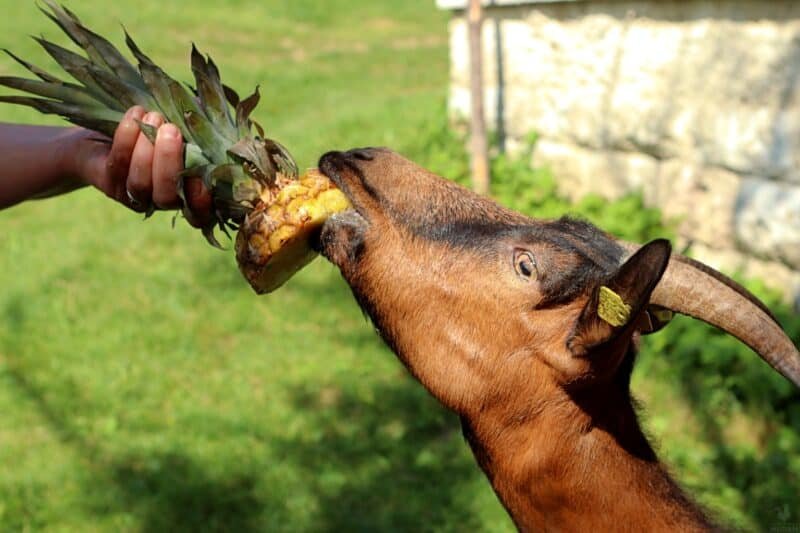
What should goats not eat?
Please don’t feed your goats things that they would never eat in nature, such as dog biscuits or human cookies. Dog biscuits have meat in them, and goats are vegetarians with a rumen. The last thing they should be consuming is meat.
You also don’t want to feed them any of our processed human food like white bread, pastries, and cookies that are totally lacking fiber. Concentrated sugar found in cookies can cause a goat’s blood sugar to go unnaturally high.
An occasional tortilla chip that is just corn, corn oil, and salt won’t hurt them, but it should definitely be an occasional treat.
You should never feed any hay or grain that has mold growing on it! This would likely cause a rumen upset that could lead to goat polio, enterotoxemia, bloat, diarrhea, or another disease that could even result in death.